
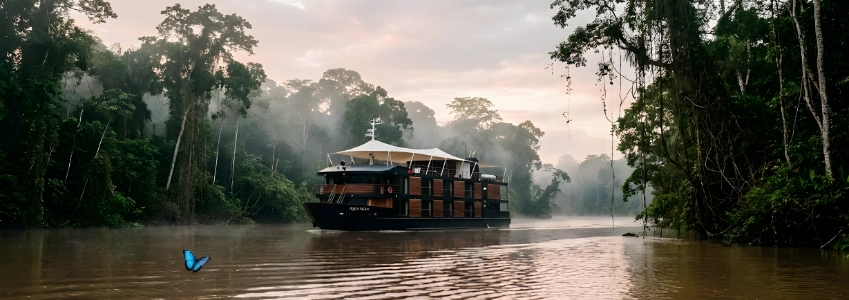
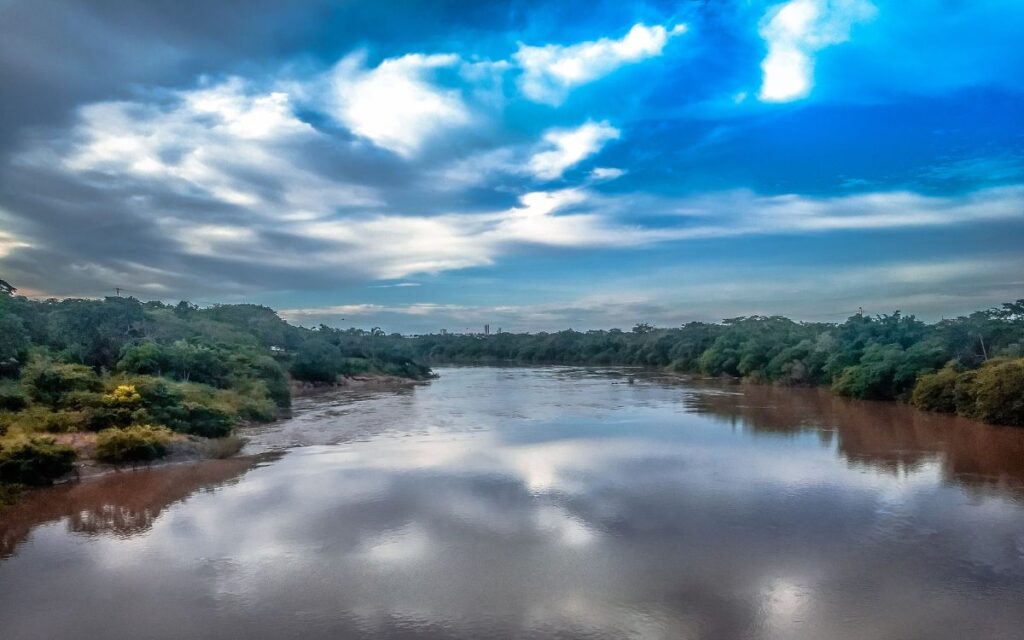
The skiff’s aluminum hull hums against brown water thick as cold soup, and something heavy-winged brushes my forearm. A butterfly the color of a chipped swimming pool tile settles there, warm and faintly dusty, then lifts off when the engine drops to a whisper. The river exhales. Our guide raises a hand, the sound of cicadas swelling as we drift. Somewhere above, leaves creak under a weight that does not care we’re here.
We find the sloth the way you find patience: slowly, after your neck starts to ache. It hangs upside down in a cecropia, a grey knot of fur with a face that looks permanently unconvinced. The binoculars smell faintly of sunscreen and rubber. Nothing poses. Nothing performs. The animal blinks, scratches, resumes the long business of existing. This is the Peruvian Amazon when it isn’t trying to sell you anything.
The journey to the river feels like a dare. Lima to Iquitos by plane, then a road that ends because the forest says so. The three-hour drive south to Nauta is loud with potholes and tinny pop leaking from the radio, the smell of diesel mixing with wet earth. Nauta itself is a place that does not apologize for being functional. From there, the river takes over, and schedules soften into suggestions.
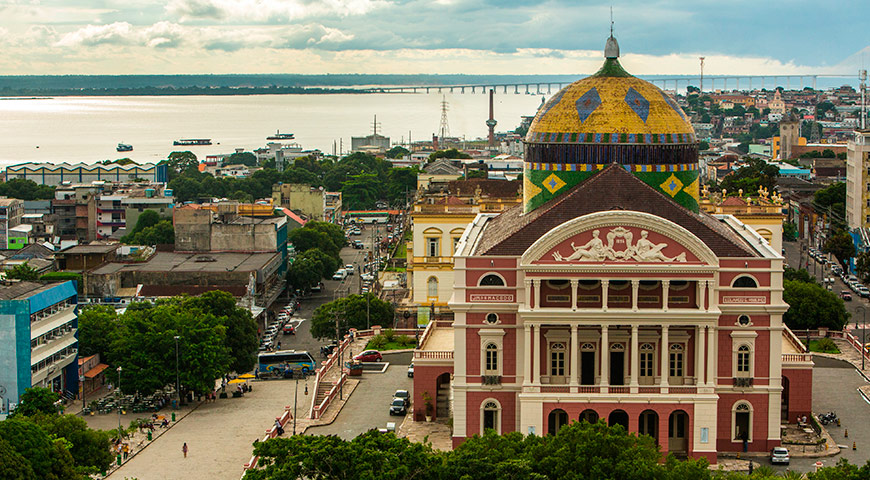
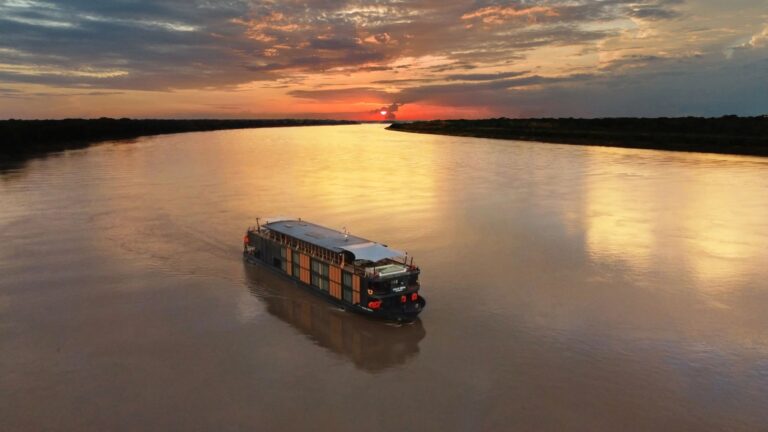
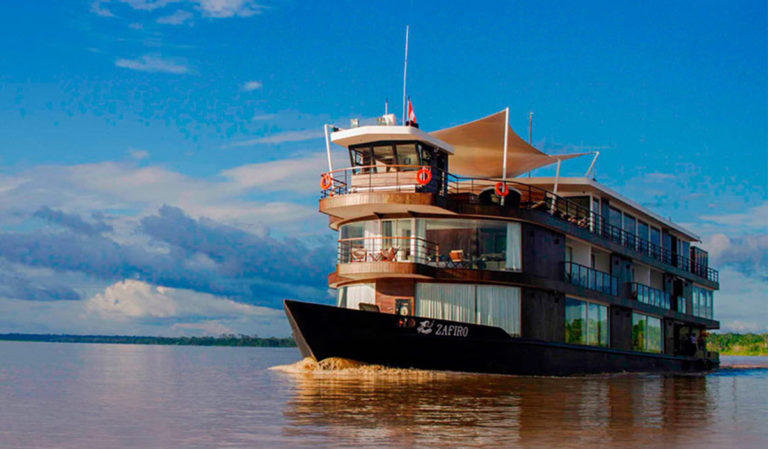
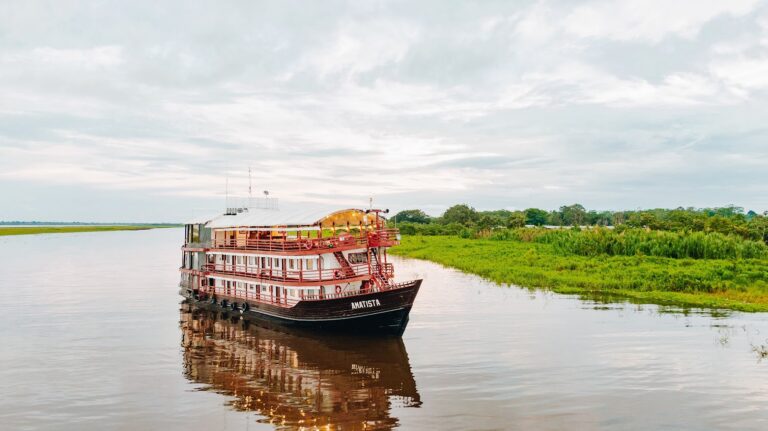
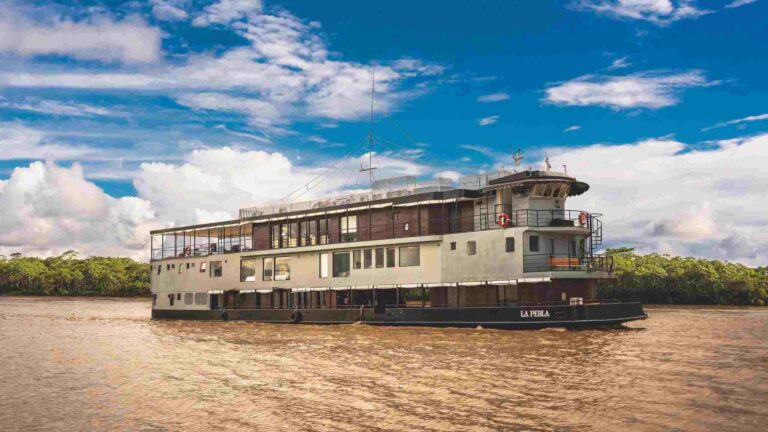
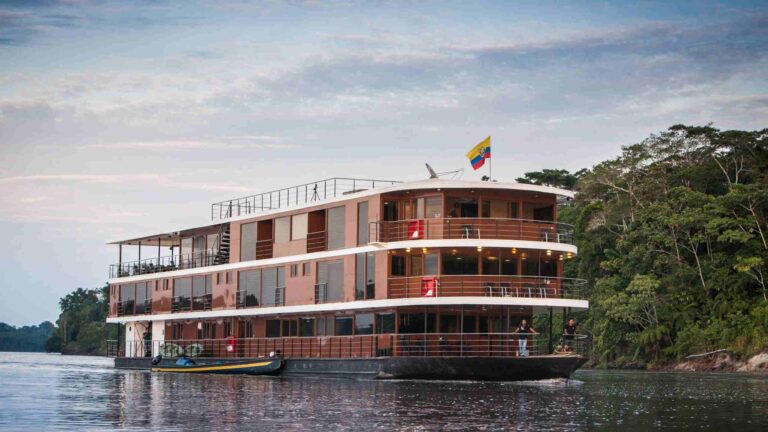
The vessel waiting at the dock is compact and deliberate, built to slip into tributaries without fuss. Boarding is quiet, shoes thudding softly on metal. Inside, the temperature drops, carpets swallow your footsteps, and the palette settles into browns and greys that feel like a long exhale. Outside, the rainforest throws color at you until your eyes feel wrung out. Inside, it’s dim, cool, and controlled, a necessary counterweight.
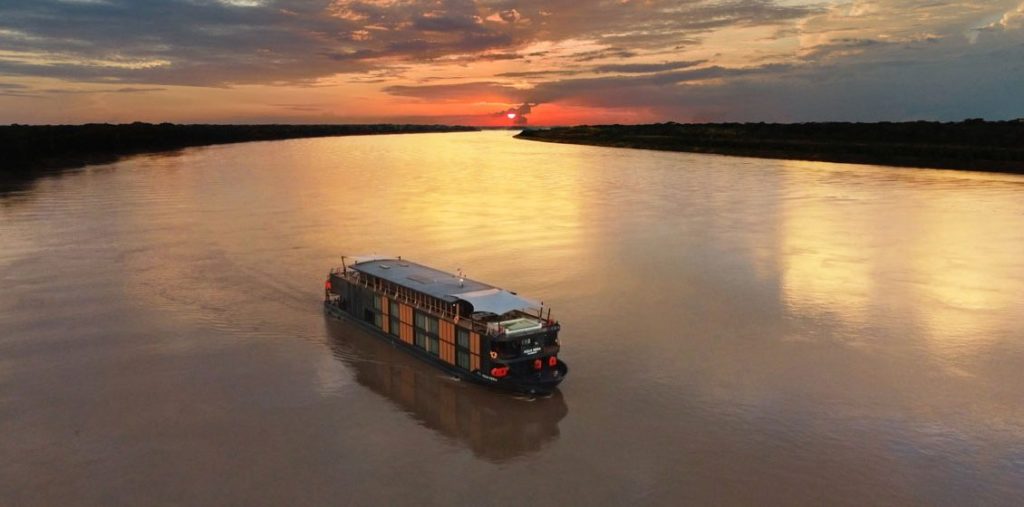
There are only twenty suites, and the absence of crowds is a physical sensation. Doors close with a cushioned thump. Windows stretch from floor to ceiling, and when you draw the curtains the river slides past like a continuous thought. At night, rain taps the glass with insect persistence. The bed smells faintly of clean cotton and wood polish. You fall asleep to engines idling and wake to birds testing their voices.

Common spaces feel designed for sore legs and overstimulated minds. Polished floors are cool under bare feet. The bar’s ice cracks sharply in the afternoon heat. In the gym, the treadmill thuds while swallows cut the air outside, and the contrast makes you laugh. Later, steam lifts from the outdoor pool as you lower yourself in, skin prickling, the jungle breathing close.
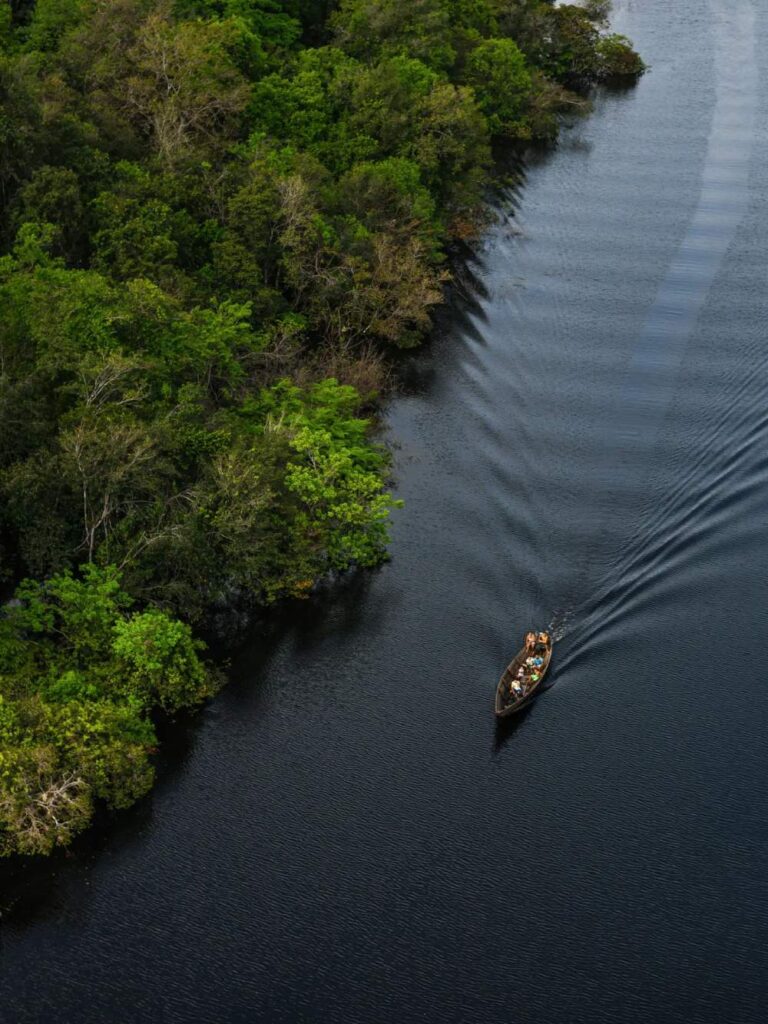
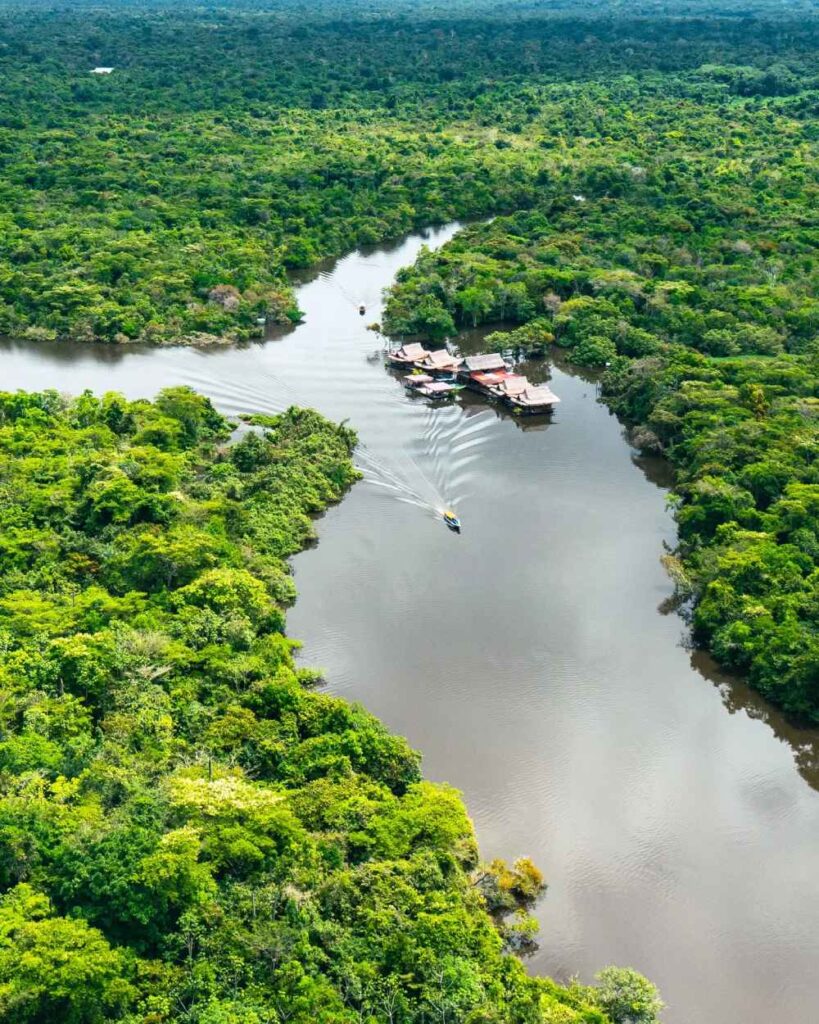
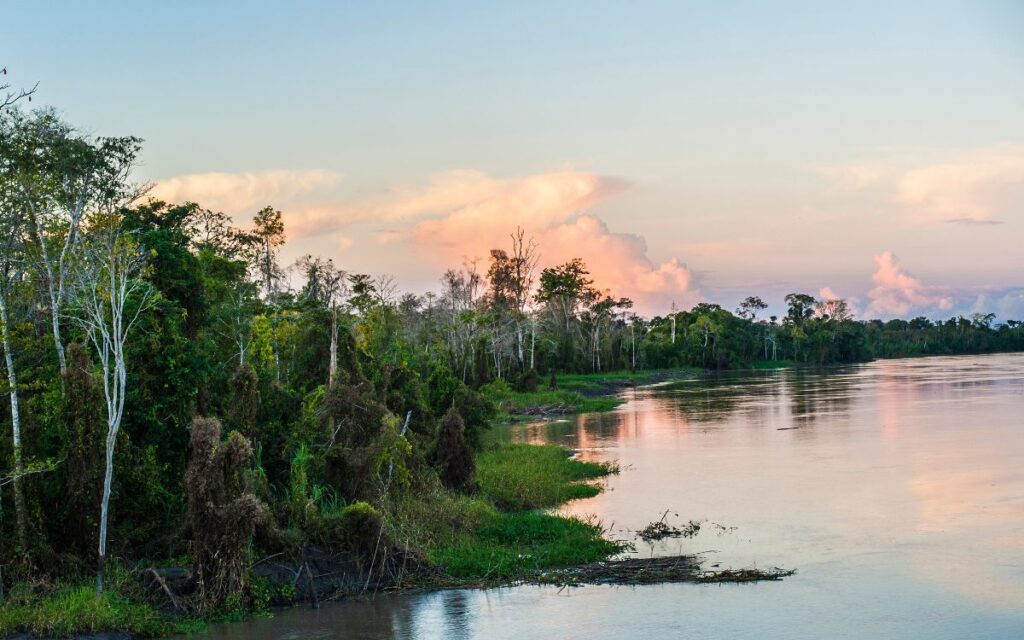
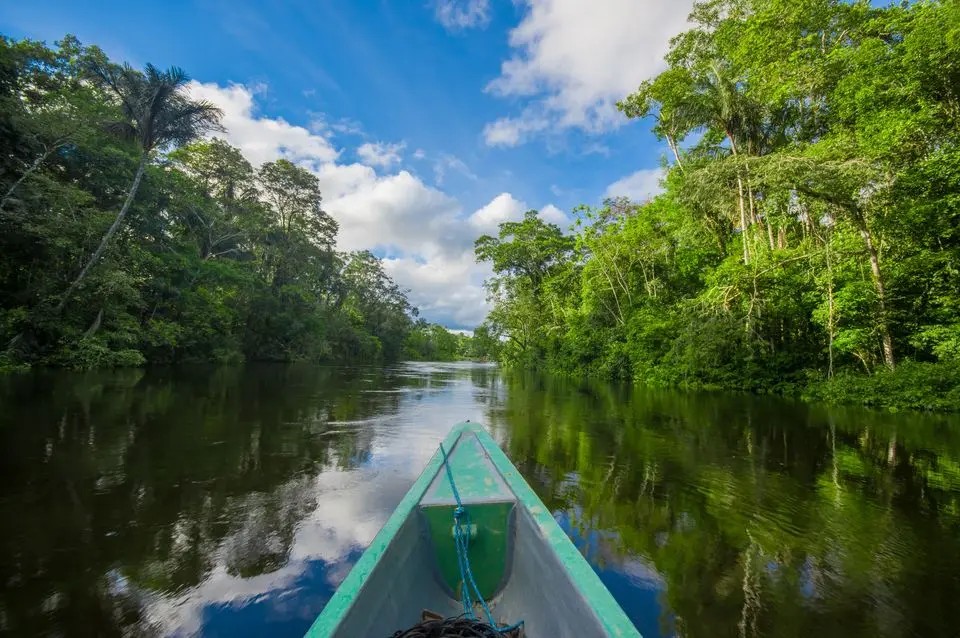
Excursions begin early, because the forest does. Dawn brings a thin pink haze over water so still it seems staged, broken only by the skiff’s wake and the slap of a fish turning. The air tastes green. We slide into narrow channels where branches scrape the sides, leaving wet streaks. Canoes pass, piled with yucca and plantains, paddles creaking rhythmically. Villages appear briefly, houses on stilts, dogs watching without enthusiasm, then vanish behind curtains of leaves.
The guides grew up here, and it shows in what they ignore as much as what they point out. They hear before they see. A shout of “macaws” comes seconds before the noise hits, a harsh chorus overhead, red and blue flashing as they cross the river together. The sound lingers longer than the sight. Your skin hums with it.
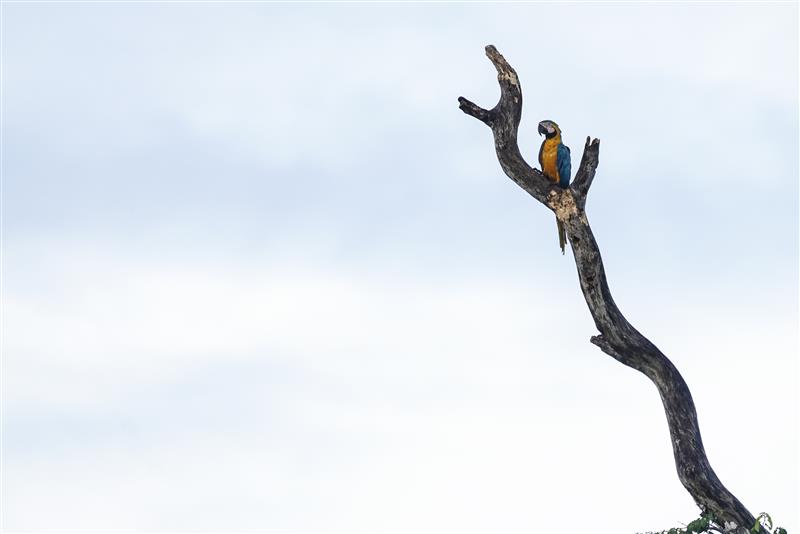
Wildlife appears in fragments. A hawk perched on a stump, feathers damp, eyes flat and assessing. Squirrel monkeys ricochet through the canopy, the thump of their landings audible. Orioles flare yellow against shadow. Bats cling to bark like discarded gloves. You twist, point, miss things. The guides do not. They smile politely and keep scanning.
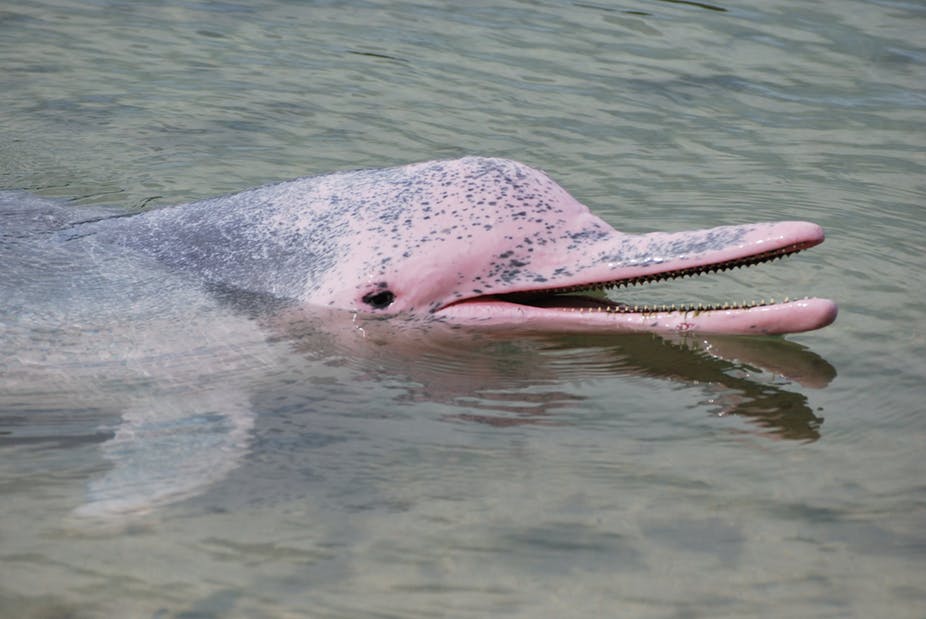
The river gives up its secrets reluctantly. Pink dolphins surface far off, backs arching like commas, fins the color of old roses seen through fog. There is no applause. The boat keeps moving. The animals sink back into water that smells of mud and leaves, indifferent to our excitement.
Back onboard, lectures fill the afternoon, voices low, fans whirring. Later, the galley takes over. Meals are rooted in the forest without turning it into a costume. Grilled paiche arrives flaky and smoky, paired with greens that taste faintly mineral. Pituca potatoes carry the comfort of starch after a long morning standing. Aguaje popsicles melt fast in the heat, sweet and sharp, staining your fingers.
Breakfast is papaya and camu camu, plantains sizzling softly, eggs made to order. Coffee is strong enough to matter. The smell of citrus and herbs hangs in the dining room, and conversations slow, everyone recalibrating. Cooking classes follow, pisco sour foam clinging to glass rims, laughter cutting through the afternoon torpor.
One morning the vessel noses up to a village called Loretto, small enough to memorize in an hour. A local guide joins us, his boots already stained dark. The forest closes in as soon as the path leaves the clearing. Ants cut leaves with methodical clicks. Termite mounds rise like hardened drips. Trees widen until they feel architectural, bark cool and damp to the touch.
We learn which plants heal and which burn, the forest’s own system of checks and balances. “The pharmacy,” the guide says, tapping a trunk. Monkeys crash through vines overhead, and then silence as a finger lifts to lips. A tarantula clings to a tree, black and bristled, utterly uninterested. Your scalp tingles anyway.
Night changes the rules. The skiff pushes into blackness thick enough to taste, stars scattered overhead. Engines idle. The forest erupts. Cicadas grind, frogs chirr, mosquitoes whine close to your ear. The sound presses in from all sides, relentless. Torches flick on and off, searching for the red pinpricks of eyes.
Caiman appear briefly, then slip under with barely a ripple. The water smells rank and alive. You realize the day was a rehearsal. This is the main event. When you return to the ship, the quiet feels artificial, a relief you accept without guilt.
Luxury here isn’t about excess; it’s about recovery. Thick carpets for tired feet. Cold air when the heat has had its say. A bed that lets you sleep through rain drumming on the roof. The vessel’s size matters, letting it go where larger ships cannot, and then stop without ceremony.
After four days, the river has rearranged your senses. You notice smells before sights. You listen longer. Animals remain unconcerned. The forest does not soften. It tolerates your passage, nothing more. That feels like honesty, and it’s why the trip lingers long after the engines cut for the last time.


Leave a Comment