
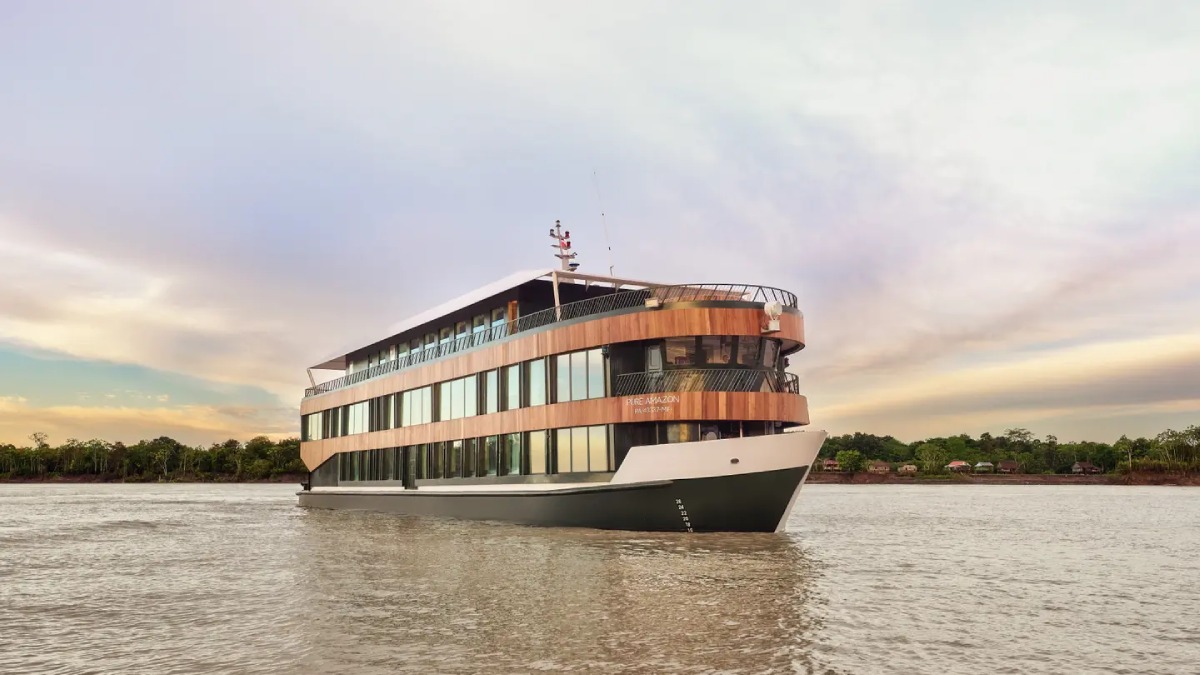
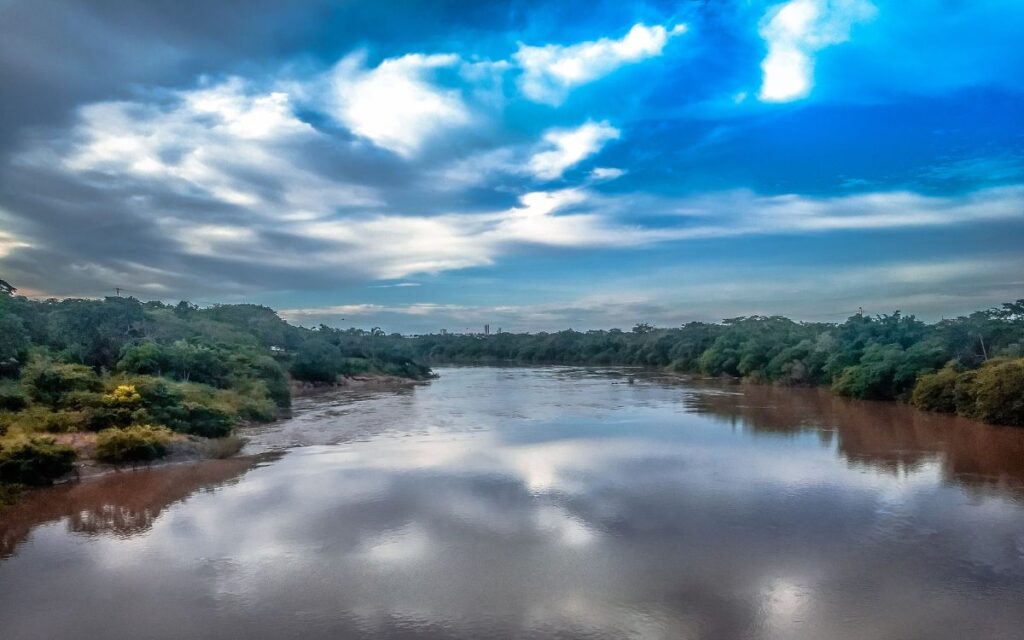
The first thing that hits you on the Amazon isn’t danger. It’s smell: wet soil warming in the sun, a faint sour rot from leaf litter, and the occasional diesel breath of a skiff that’s been working since dawn. The water looks like stirred chocolate, and when spray finds your lips it tastes of minerals and old vegetation. Your childhood brain wants teeth and darts and melodrama. Your adult body wants a chair that doesn’t wobble. That’s how you end up on board the Pure Amazon, which is the point: you can be close to the river without having to perform hardship.
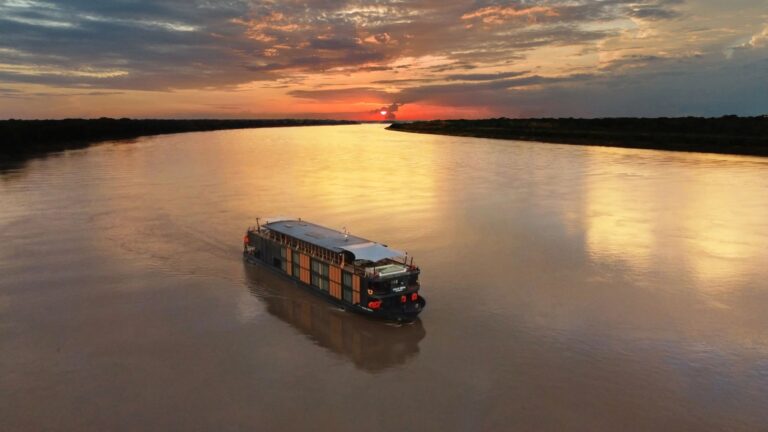
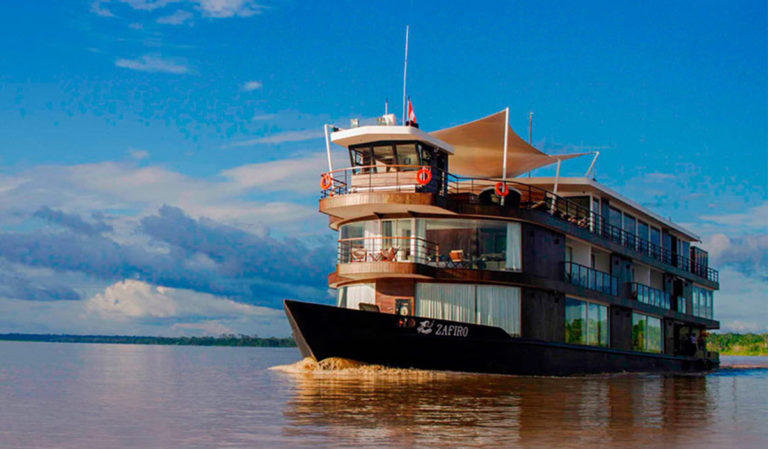
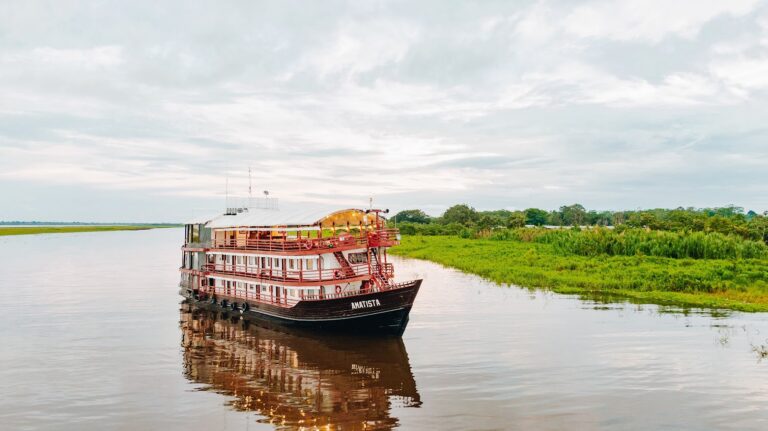
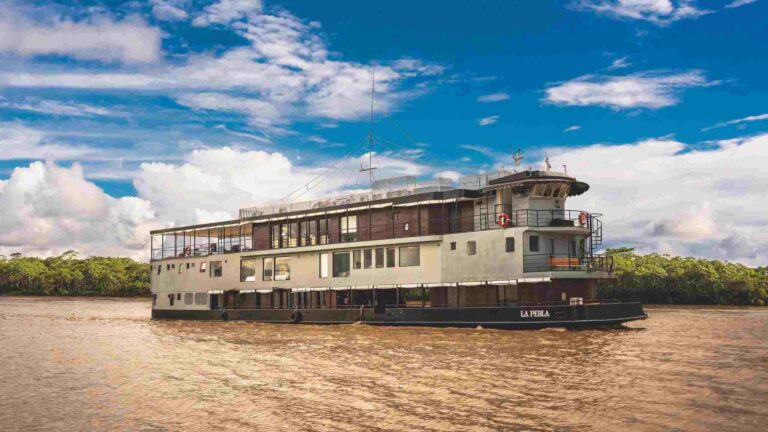
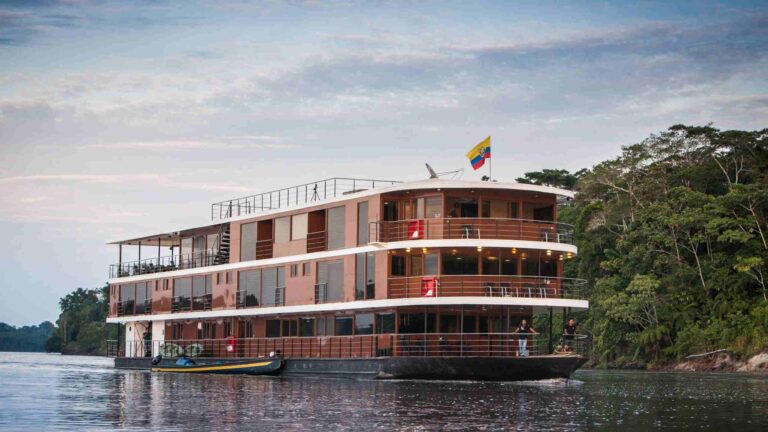
The Pure Amazon is an ultra-modern riverboat built for a small crowd—just 22 guests—so the atmosphere stays quiet enough that you can hear the river slap the hull at night. The corridors hold that clean, hotel-scented note—citrus cleaner, cool air, a hint of wood polish—while outside the humidity sticks to your wrists like a damp bandage. You’re not “conquering” anything here; you’re being carried through it with steady engines and a staff that appears before you’ve even finished thinking about what you want. That kind of service can feel a little decadent in a place this raw. It also makes the whole experience possible if your knees, back, or patience aren’t built for heroic suffering.
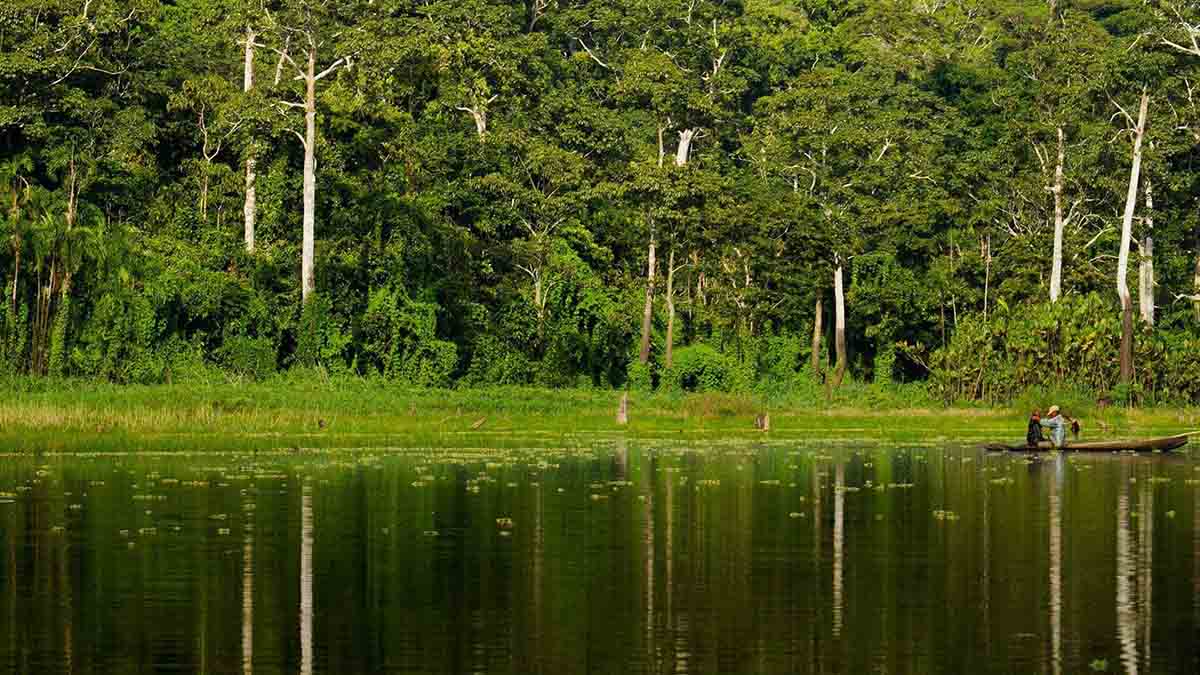
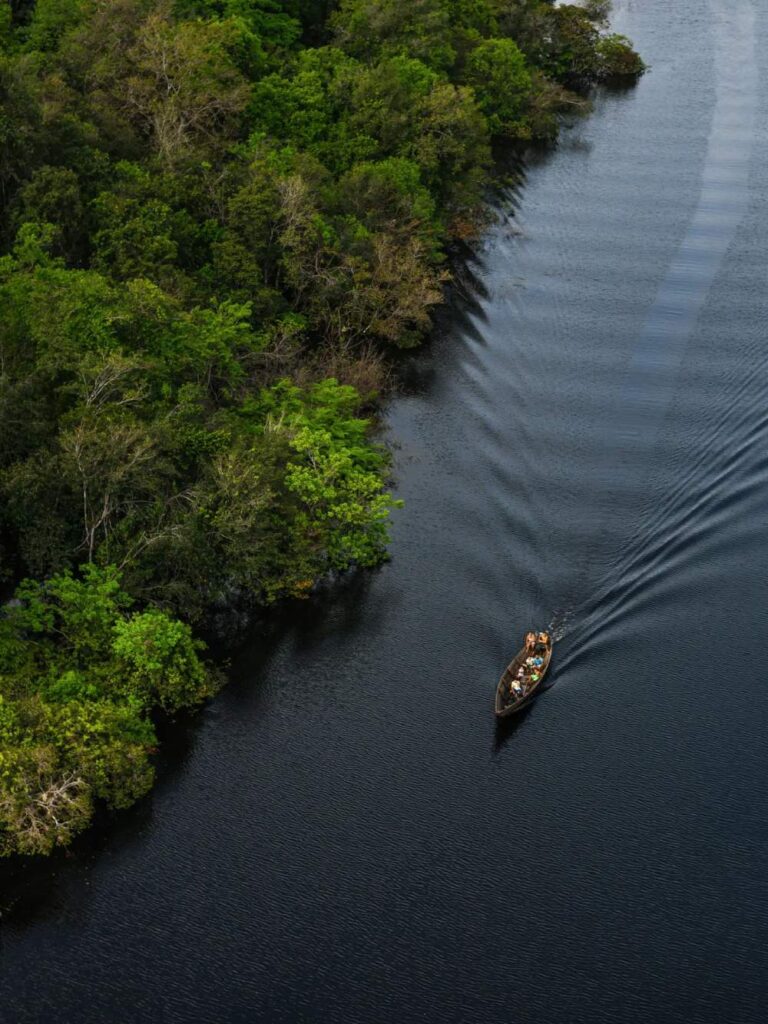
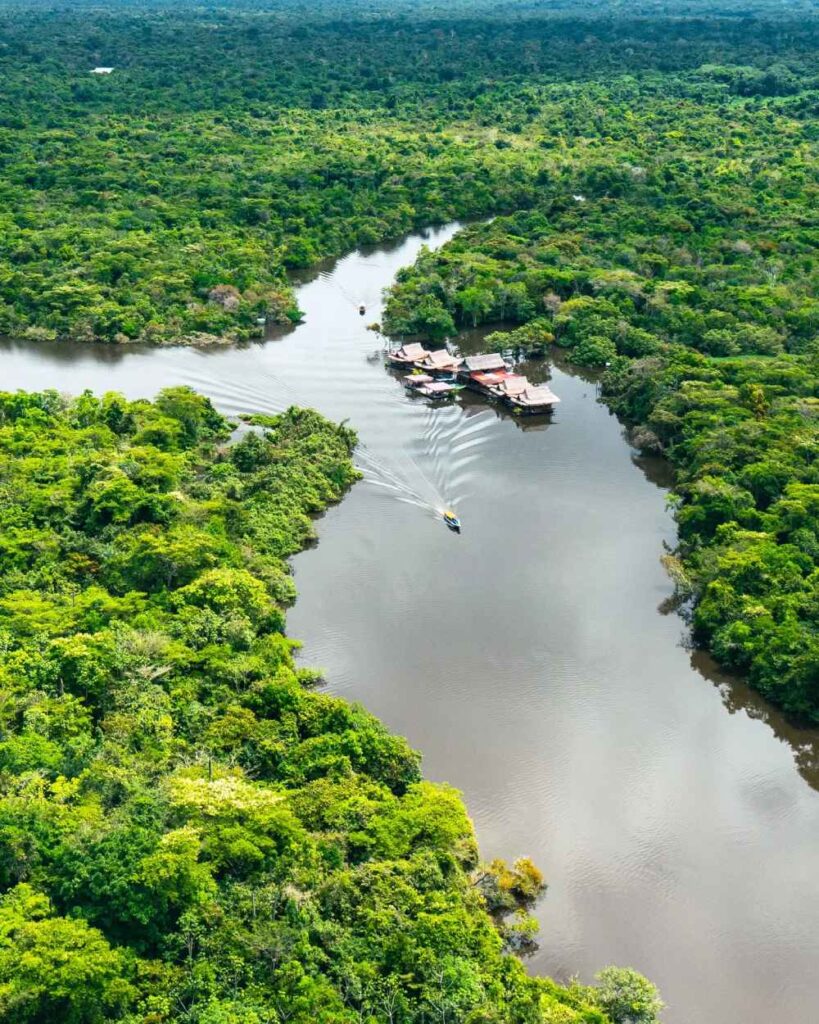
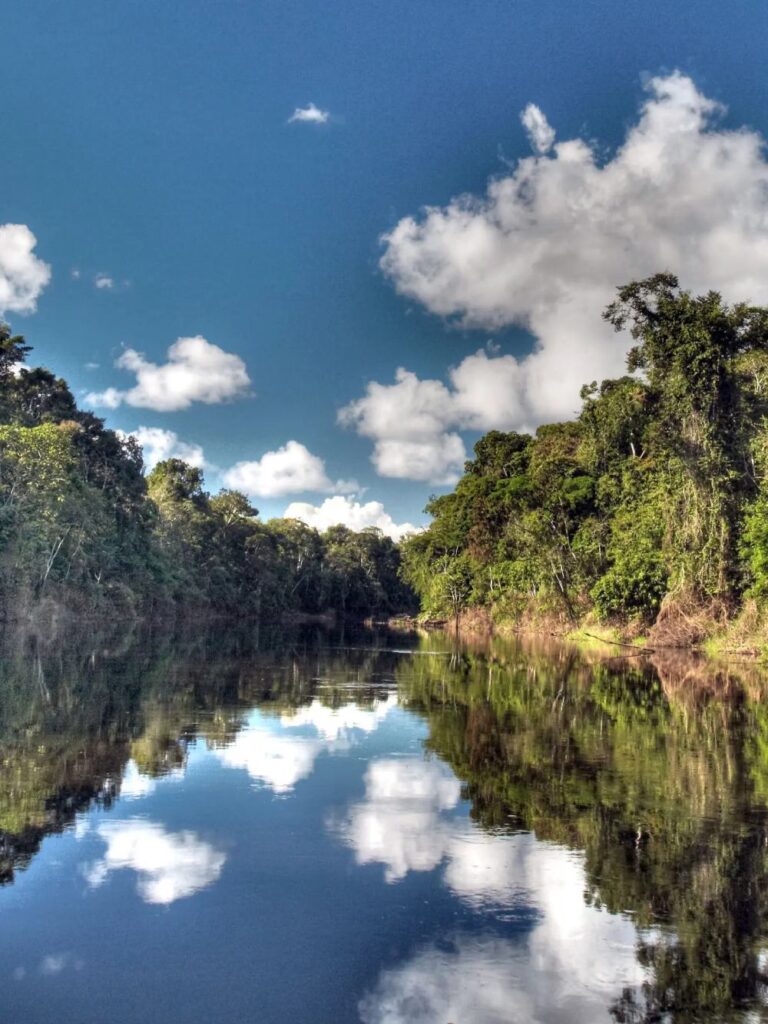
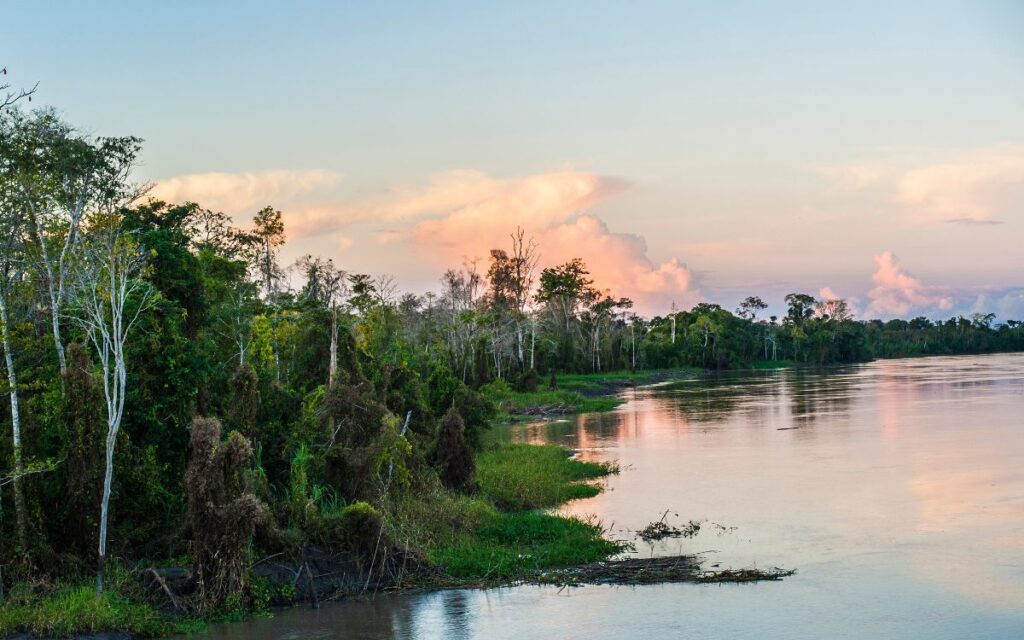
The cruising grounds cut through the Pacaya-Samiria National Reserve, a protected area spanning more than 21,000 square kilometers—big enough that the word “reserve” starts to feel inadequate. The air out here has layers: cool damp in the early morning, then a thick warm sweetness later that makes your shirt cling between your shoulder blades. The forest isn’t a movie set; it’s working, breathing, and occasionally indifferent, and the river traffic reminds you of that. You’ll see fishermen hauling in catfish and other boats running supplies—beer, fuel—because people live and work around this water. The Amazon doesn’t pause for tourism. It just tolerates it, provided you keep moving and don’t get in the way.
Itineraries run in three, four, or seven-night arcs, which is a polite way of saying you can choose how much humidity you’d like in your life. Three nights gives you the taste: the morning bird calls, the wet heat, the shock of cool air-conditioning when you step back inside. Seven nights lets the rhythm settle into your bones, and you stop checking the time because the river has its own clock. Either way, the days follow a pattern that feels comforting: short sorties on skiffs, a return to cold towels and cold drinks, and meals that arrive like punctuation. The river is always there, audible in the background like distant applause you didn’t ask for.
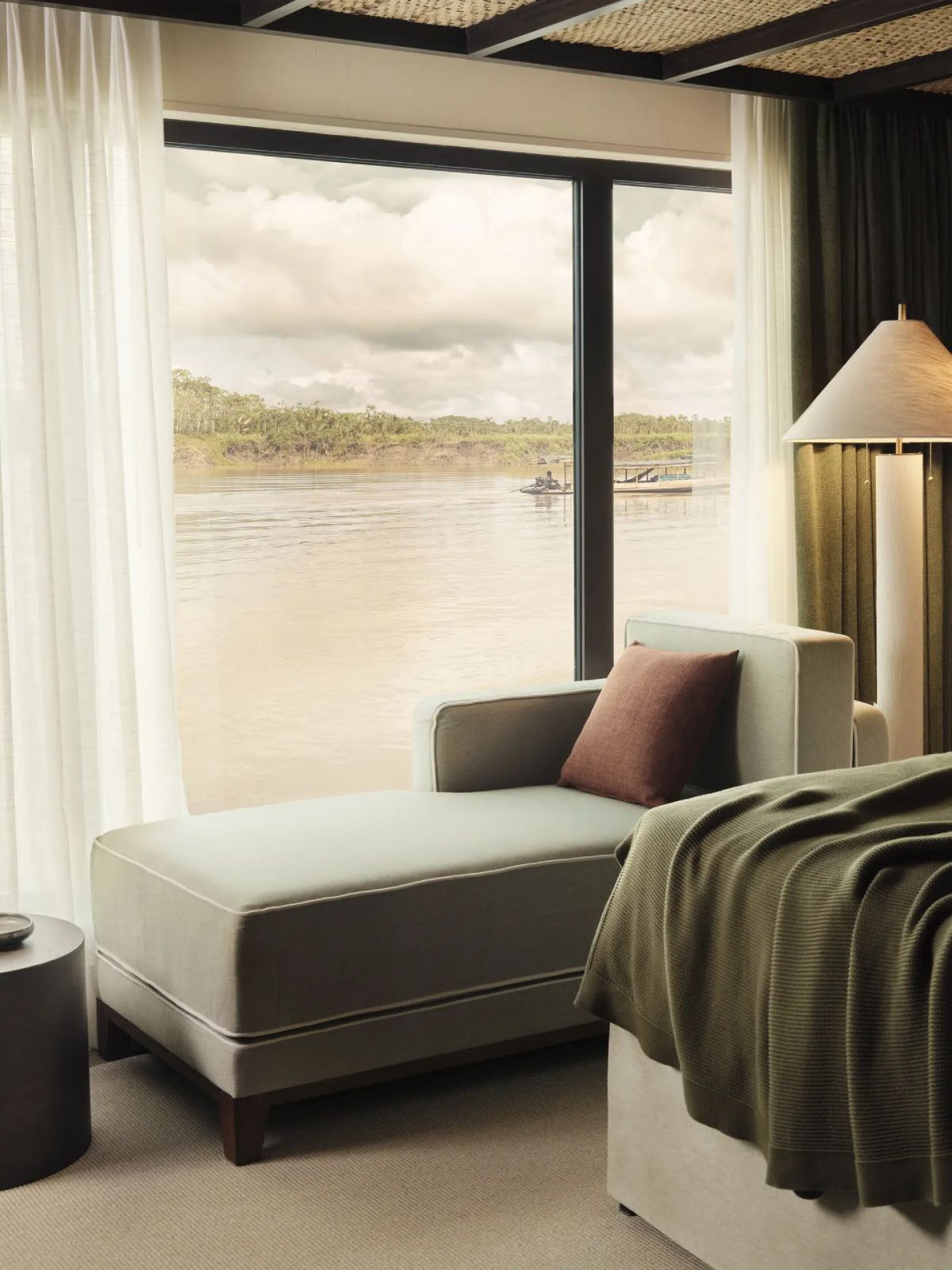
Cabins and suites on the Pure Amazon are designed to make the wilderness feel optional, which is not an insult—just accuracy. Sheets feel cool against your skin even when the air outside is heavy and wet. The shower has real water pressure, the kind that digs the day’s sweat out of your hairline and makes you sigh without meaning to. Through the window the river rolls by, opaque and wide, carrying branches and stories and things you’ll never identify. At night, the hum of the boat is constant and low, like a refrigerator in a quiet apartment. You sleep well because your body isn’t on guard.
There’s indoor and outdoor dining, and the contrast matters: inside, glass and air-conditioning; outside, warm air that smells of river and leaves, and the occasional buzz of something small and determined circling your ear. The menu swings between local ingredients and familiar comforts, which is exactly what most people want after a morning of damp shoes and bug spray. Fish arrives firm and clean, and citrus cuts through the richness like a sharp note. Coffee comes strong enough to clear the fog out of your head, and you can hear the soft clink of cutlery as the boat keeps sliding forward. It’s the most civilized way to feel remote.
Aboard the Pure Amazon, a team of onboard specialists—properly trained, not just enthusiastic—runs the days with calm competence. You feel it in small things: how smoothly the skiff pulls in, how quickly someone hands you water, how they scan the sky and the river with the kind of focus that comes from repetition. The best guides don’t hype the forest; they translate it. They point out a bird by sound before you see it, and once you’ve heard that call you can’t un-hear it. In the morning, the air is cooler and smells greener, and the forest’s noise feels sharper, like someone turned up the treble. You come back hungry, and not just for breakfast.
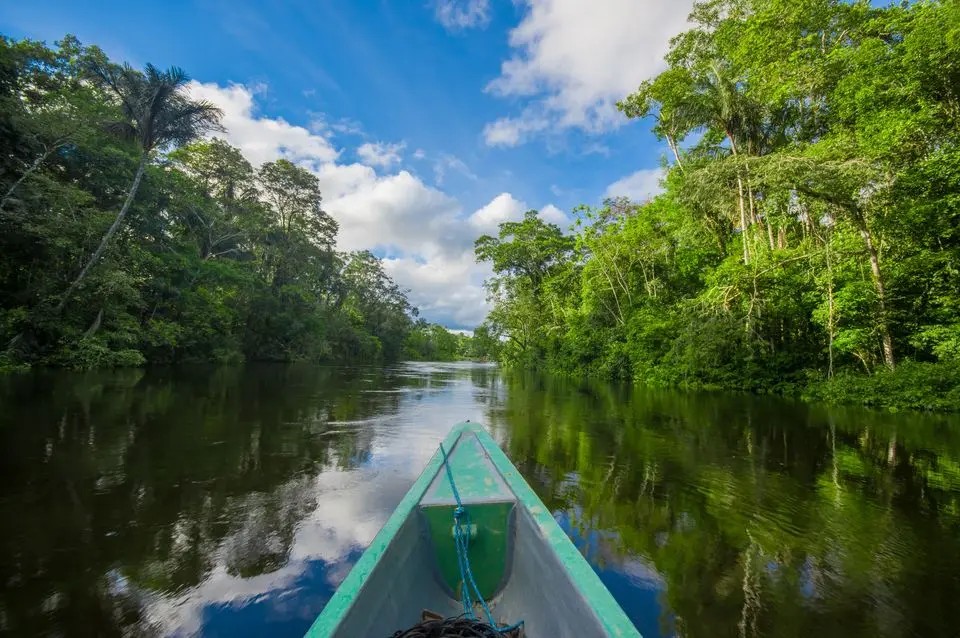
The activities stitch together water and forest when conditions allow—because weather is the real boss out here. Some days you get kayaking for an hour, your paddle making that soft, satisfying slap against the surface, arms warming as the humidity settles in. Other days it’s a short forest walk, shoes sinking slightly into spongy ground, your calves working harder than you expected. You might swim, you might fish, you might simply sit in a skiff and listen while insects click and birds throw sound across the water. None of it lasts long enough to wreck you. It’s enough to make the Amazon feel tactile: sweat on your back, river air in your lungs, and the faint sting of repellent on your hands.
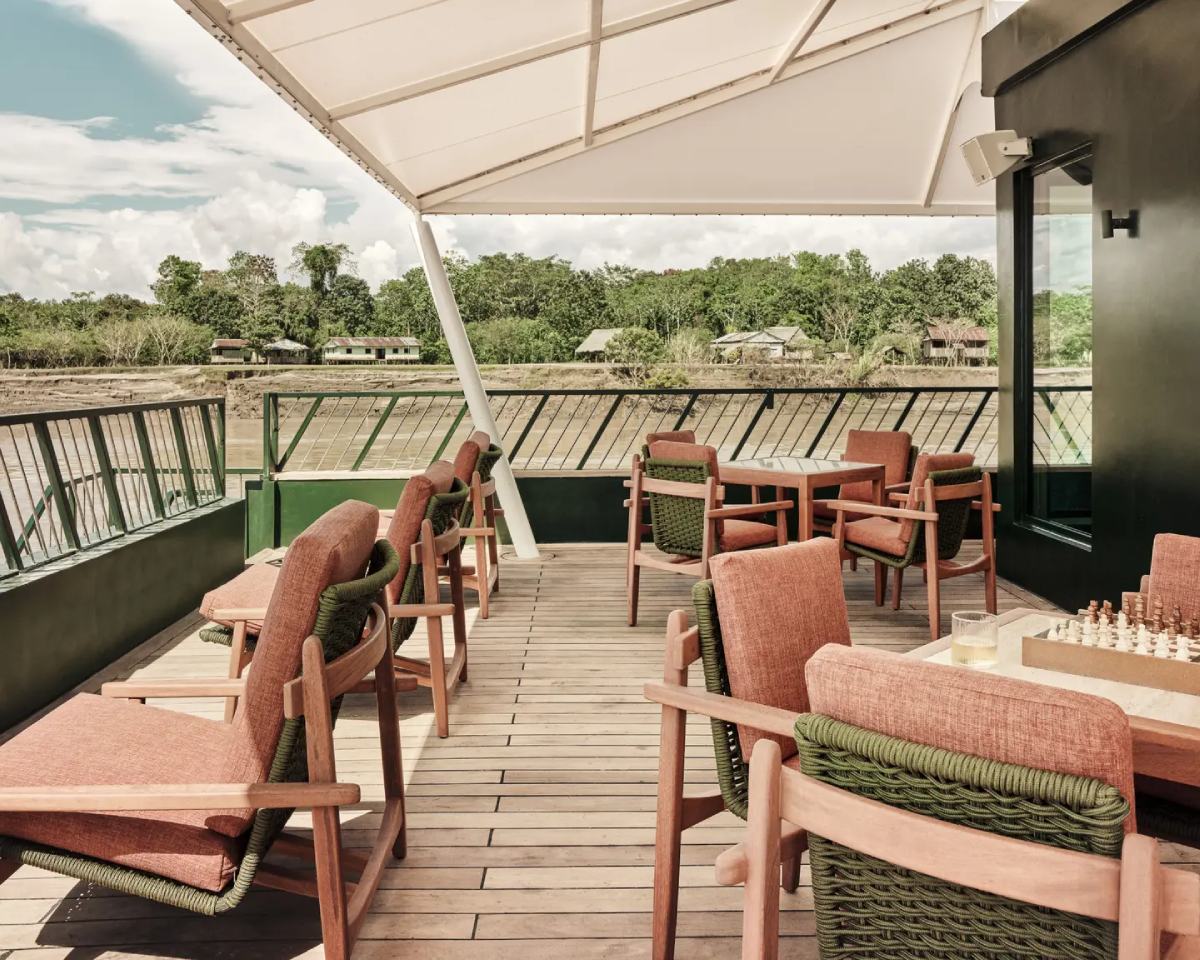
Back on the boat, the outdoor amenities—Jacuzzi and Sun Deck—aren’t just perks; they’re part of the emotional math. You go out into the sticky heat, you do your hour of damp reality, then you come back to warm bubbles that loosen your joints while the sky turns darker. The Jacuzzi water smells faintly of chlorine and sunscreen, a weird little reminder that luxury always leaves a signature. From up here you can hear birds moving across the river and the engine’s steady pulse beneath your feet. A drink in your hand tastes colder because the air around you is warm. It’s comfort as recovery, not comfort as denial.
And yes, that individualized service—one staff member assigned to each guest—changes the temperature of the whole experience. You don’t have to chase anyone down for water, towels, or help with muddy shoes; it appears, quietly, before irritation has time to bloom. That can feel almost absurd in a place where the river doesn’t care if you’re thirsty. But it also means the focus stays on what you came for: the sounds of the forest, the smell of wet earth, the taste of something local and unfamiliar at dinner, and the sight of water going on longer than your attention span. It’s not adventure in the boyhood sense. It’s the adult version: access without punishment.
If you want a single sentence that plants the flag clearly: you’re experiencing this stretch of the Amazon—through Pacaya-Samiria—on board the Pure Amazon, a small-capacity, ultramodern riverboat built to balance skiff-time and forest-time with a bed you’ll actually look forward to. The river remains huge and stubborn and slightly intimidating. You just get to meet it with dry sheets, strong coffee, and a hot tub waiting when your legs start complaining. And honestly, the Amazon is impressive enough without you having to suffer for it

Leave a Comment