
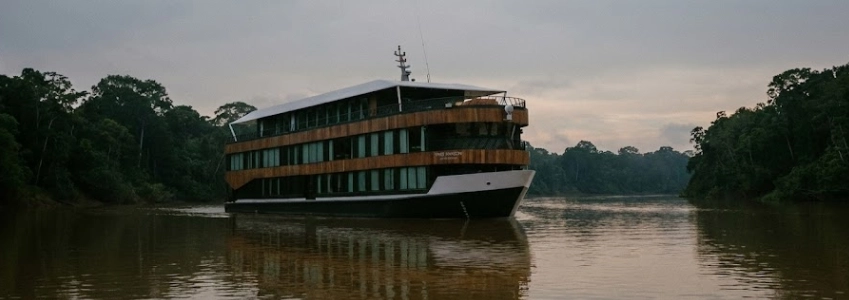
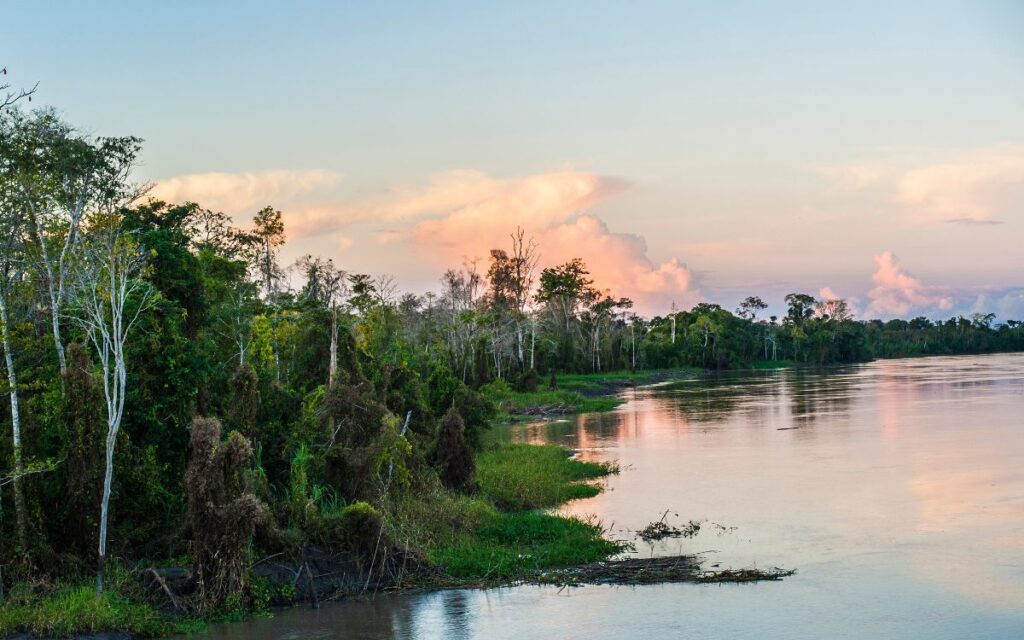
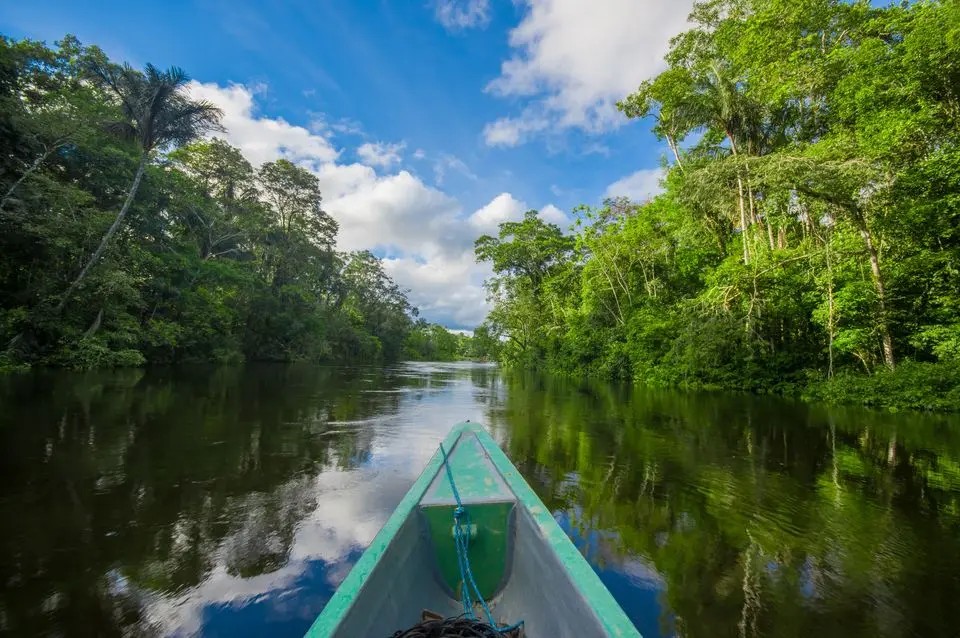
The skiff’s engine coughs and then dies, leaving us drifting on water the color of old tea, thick with rot and pollen. The air smells sweet and sour at once, like overripe fruit left too long in the sun. Something large and powdery brushes my forearm, an enormous blue butterfly, wing dust faintly chalky against skin—then lifts off without ceremony. The silence afterward is heavy, broken only by insects ticking like loose wires. Our guide raises a hand. We wait, sweating, listening to our own breathing.
He points up with the calm of someone who has done this a thousand times, binoculars pressed to his face. I strain, neck already sore, until the shape resolves: a sloth, grey and matted, hanging upside down like laundry forgotten in a storm. It does nothing. Not for us, not for the camera lenses clicking softly. The smell of damp leaves drifts over from the bank. This is the Amazon at rest, uninterested, and it makes no effort to perform.
Getting There Is the First Filter
Reaching this stretch of river takes patience and a tolerance for inconvenience. You fly from Lima to Iquitos, a city marooned by geography, reachable only by air or water, where the humidity hits like a warm towel slapped across the face. From there, it’s a long, bone-rattling drive south to Nauta, the only road out, dust coating your teeth, engine whining. By the time I step onto the dock, my shirt clings and my ears ring. Luxury begins only after you’ve earned it.
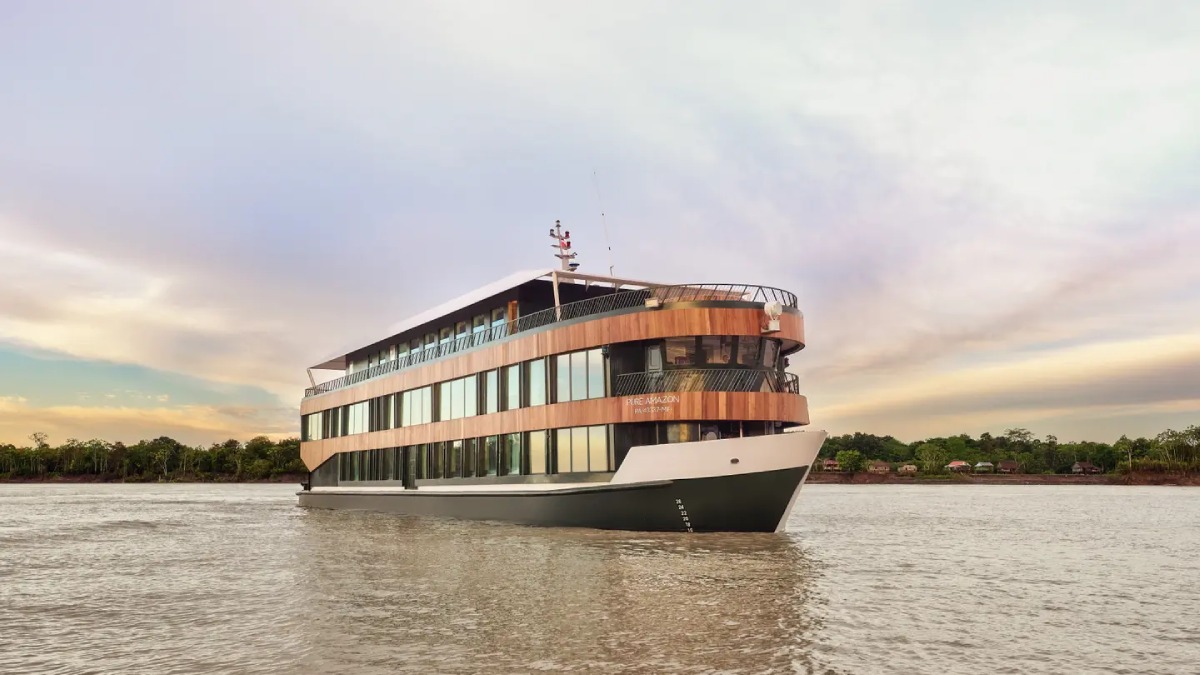
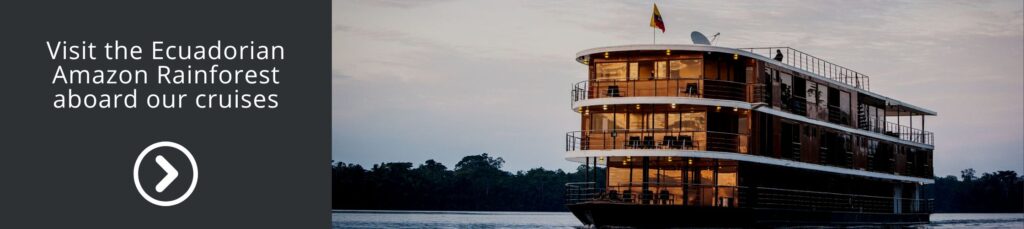
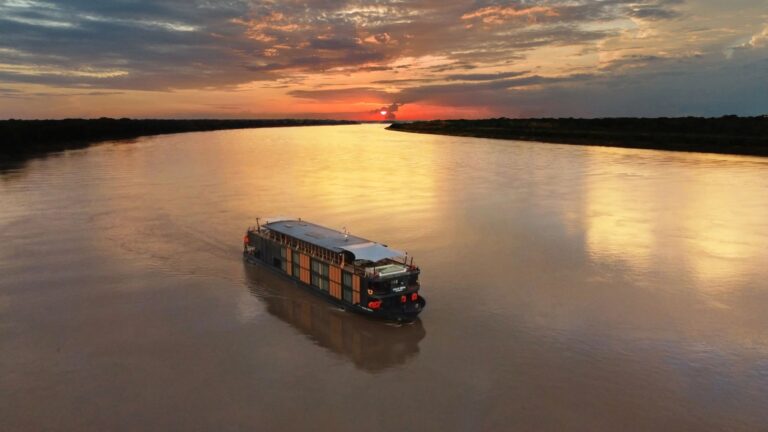
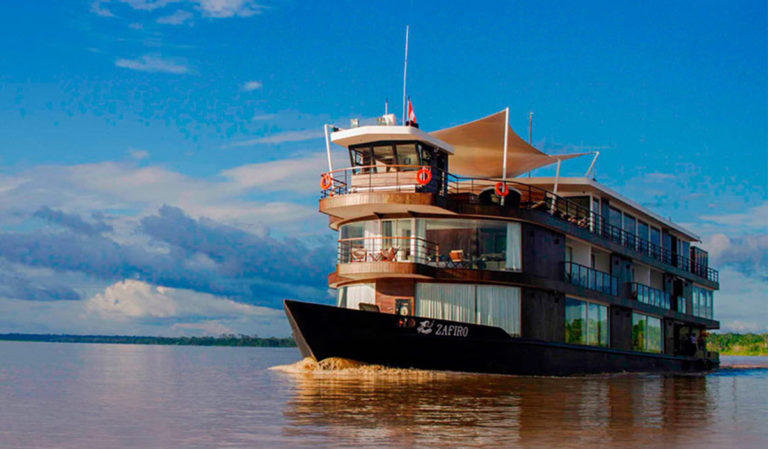
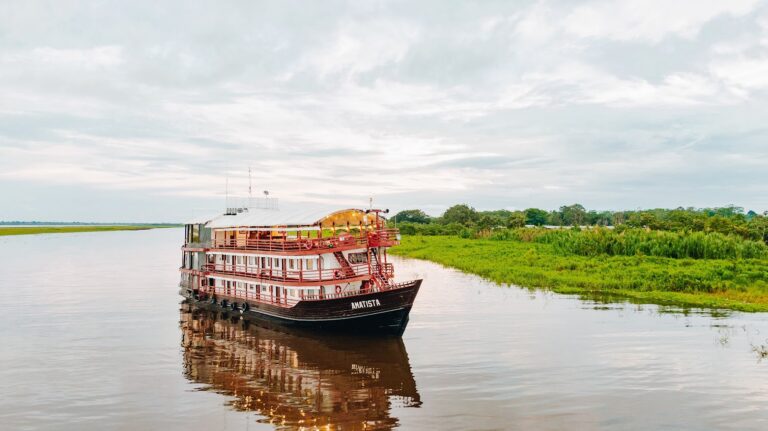
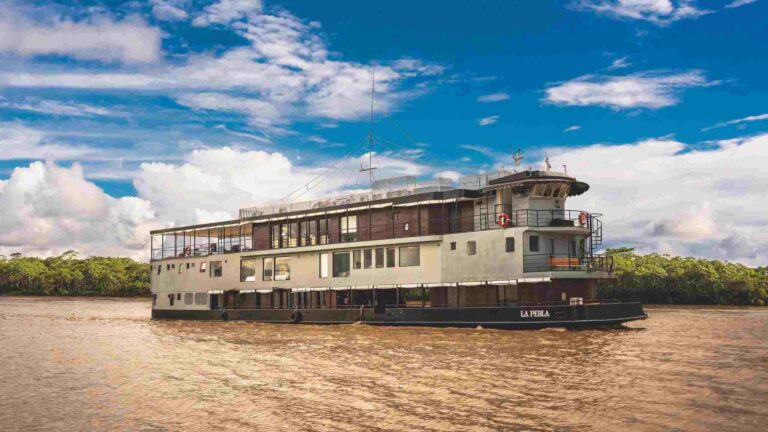
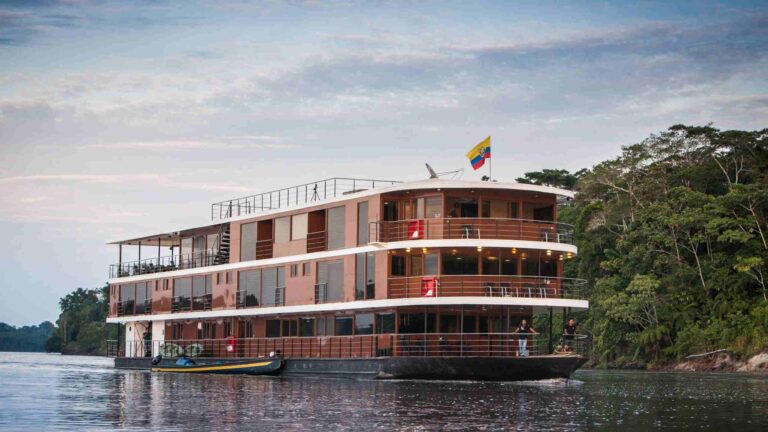
The vessel itself is compact, deliberately so, built to slip into narrow tributaries without fuss. Inside, the temperature drops and the smell shifts to polished wood and clean linen. Carpets cushion tired feet; the hum of the generators is a low, constant presence. From the bed, you can hear water sliding past the hull at night, a sound halfway between rain and breath. It’s comfortable without being precious, a controlled interior against a chaotic exterior.
Life Aboard, Between Heat and Air Conditioning
Days settle into a rhythm dictated by the river and the heat. Curtains fling open to reveal movement outside, but the real sensation is felt: warm air sneaking in, skin prickling. Instead of scrolling, I lie back and listen to birds arguing somewhere beyond the glass. In the lounge, ice clinks in glasses at the bar, a small mercy. Coffee is strong, slightly bitter, necessary. The contrast between chilled interiors and the damp furnace outside is constant and deliberate.
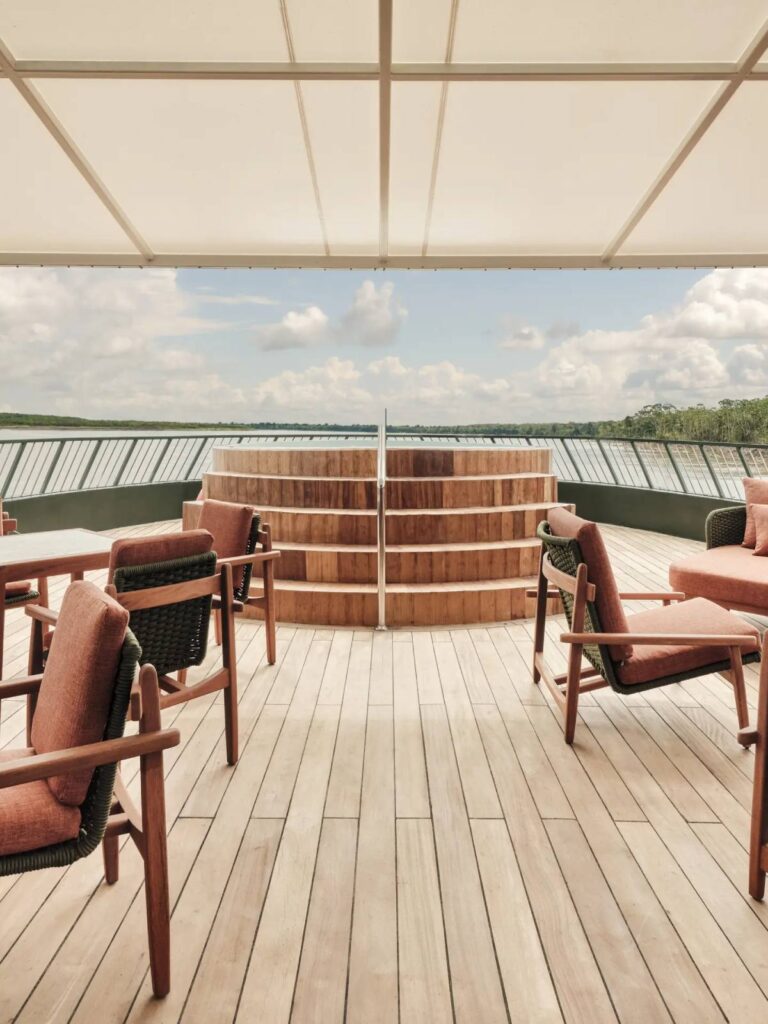
There’s a gym where treadmills face the river; you run while watching swallows cut the air, their calls sharp and sudden. Muscles ache differently here, from ladders and uneven ground rather than weights. After excursions, the small pool and jacuzzi hiss invitingly, steam mixing with jungle smells drifting in. Chlorine meets wet earth. You soak, legs heavy, listening to cicadas rev up as dusk approaches.
On the Water, Early and Often
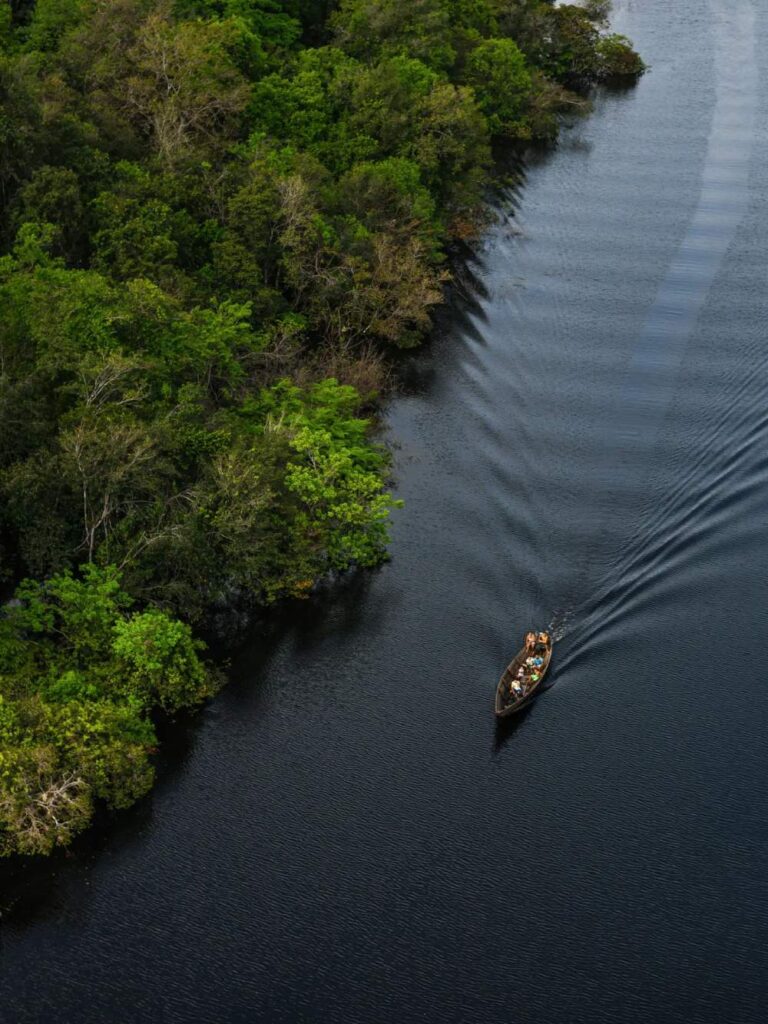
Excursions go out two or three times a day, timed to the light and the animals’ indifference. Early mornings are the quietest. Engines idle, then cut, and the skiffs glide forward with a faint slap of water against rubber. The river smells metallic at dawn. Somewhere, something splashes. We pass dugout canoes piled with yucca and plantains, the scrape of wood on water audible before the people themselves acknowledge us.
The guides grew up here, which becomes obvious in the way they listen more than they look. One murmurs a name before any of us hear the sound,
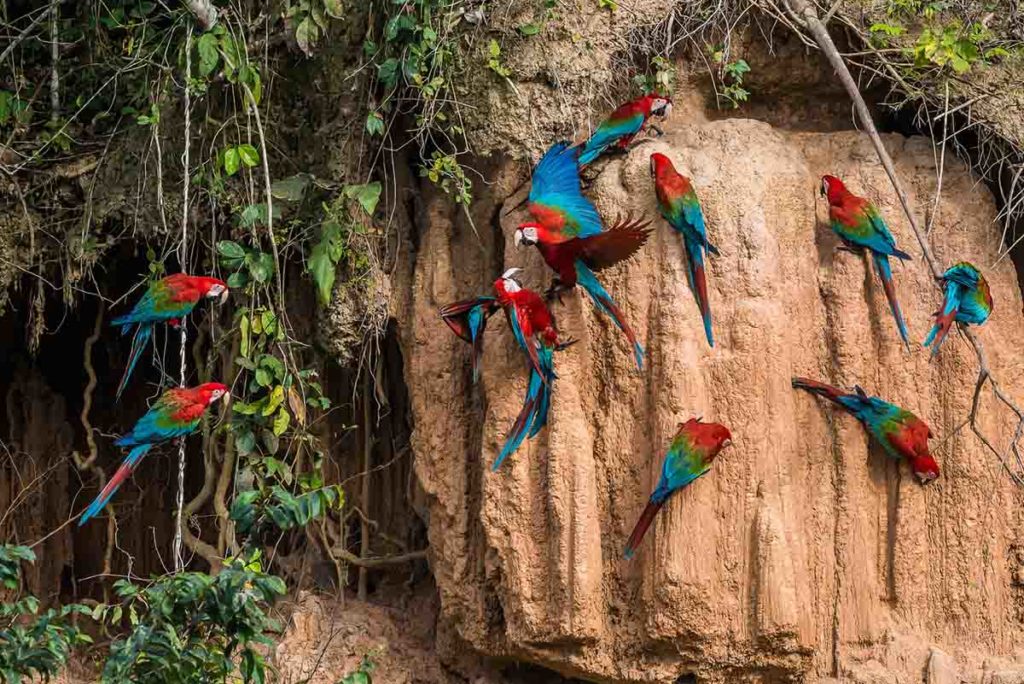
macaws, and then the air fills with harsh squawks, wings beating like loose canvas. They cross the river en masse, loud, impatient, gone. It’s over quickly. My neck aches from craning. Sweat trickles down my spine.
Animals on Their Own Terms
A hawk stands on a stump in the reeds, nearly waist-high, watching us with mild irritation. Squirrel monkeys crash through branches overhead, leaves shaking, the sound more chaos than grace. Bats cling to a trunk, noses improbably long, smelling faintly of musk when the skiff drifts too close. Everyone whispers, though it changes nothing. The animals do not care about our presence; they tolerate it until they don’t.
The pink river dolphins take longer. Days of scanning water, eyes tired, hands sticky with sunscreen. On the last morning, backs break the surface in the distance, a muted blush against brown water. No leaps, no show. Just a slow arch and a soft exhale you feel more than hear. Then they’re gone. Someone sighs. Someone else shrugs.
Food as Context, Not Performance
Back onboard, the mood shifts with the smell of food. Lunch might be grilled paiche, its flesh firm and smoky, paired with a salad made from bitter greens you won’t find at home. Popsicles flavored with Amazonian fruit taste earthy and sharp, melting fast in the heat. This isn’t comfort food; it demands attention. Even the ceviche has bite, citrus stinging lips, fish clean and cold.
Breakfasts are generous: papaya slick with juice, fried plantains crackling at the edges, eggs cooked to order. Coffee is poured often. There are demonstrations—how to shake a pisco sour properly, why the foam matters—but they’re practical, not theatrical. You drink, you eat, you sweat again. Peru’s reputation for food makes sense here because it’s tied to place, not trend.
On Foot, Briefly, and With Consequences
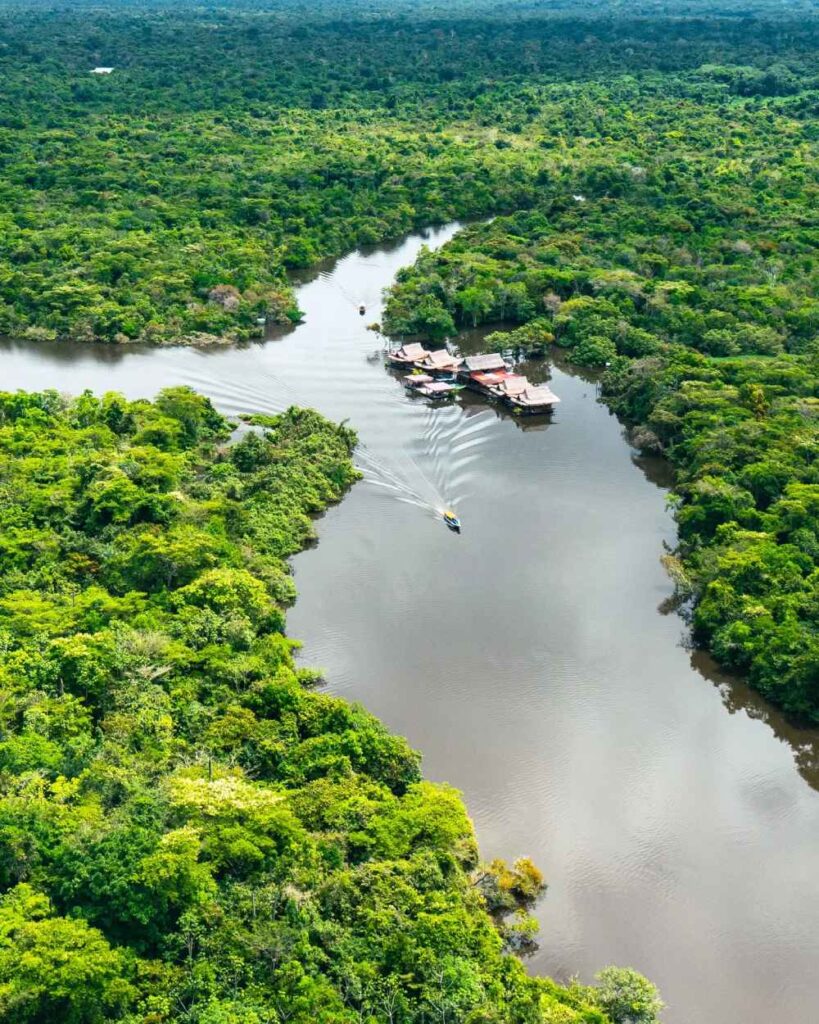
One morning we stop at a small village, wooden houses lifted on stilts, dogs sleeping through our arrival. The air smells of smoke and damp soil. We pick up a local guide and step into the forest, boots sinking slightly with each step. Ants cut green arcs from leaves, termite mounds crumble under a probing stick. Sweat runs into eyes. Nobody pretends this is easy.
Ten minutes in, we stop. Silence, then a finger to lips. A tarantula clings to a tree trunk, thick legs unmoving, the hairs on them catching light you can’t feel but can almost sense. It doesn’t move. Neither do we. Somewhere, a monkey crashes away, unimpressed. When we turn back, calves burn and shirts are soaked. The walk is short, and that’s enough.
What Lingers
Evenings bring lectures in an air-conditioned room, the soft whir of fans mixing with voices explaining ecosystems that feel less theoretical after a day outside. At night, lying in bed, you hear rain drumming on the roof, smell wet wood through cracked vents. Fatigue settles deep. This isn’t a trip that trades in grand conclusions. It offers repetition, discomfort, moments of quiet payoff. The river keeps moving. So do you, for a while, then you leave it behind.
Leave a Comment