
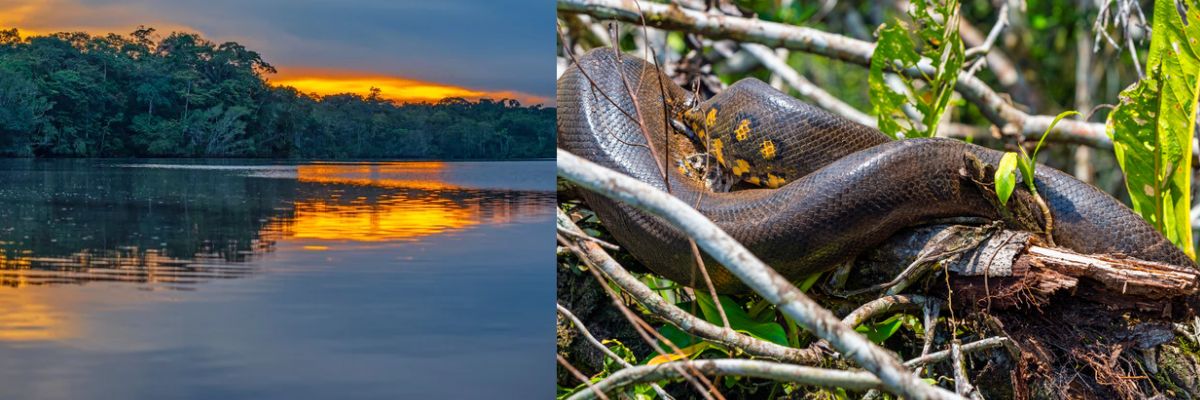
Somewhere high in the Amazon canopy, among thick branches and leaves that barely allow sunlight through, a young harpy eagle is learning to live beyond its nest. The humid air carries the smell of vegetation, while the forest continues its daily activity, largely indifferent to the attention this bird of prey attracts from wildlife enthusiasts. For months, the territory of the Kichwa Añangu Community, within Yasuní National Park in Ecuador, has been the setting for a significant stage in the eagle’s development. Now, the young bird has begun leaving its nest during the day to hunt, returning at night to rest. This change marks a new chapter in its relationship with the forest and creates fresh challenges for visitors hoping to observe it in the wild.
The news comes from the guides and bird specialists at Napo Wildlife Center and Yasuní Ecolodge, who have monitored the eagle’s growth over recent months. Their observations reveal an important transition: the nest remains a place of rest, but it is no longer the center of the bird’s daily activity. For travelers planning to join the Harpy Eagle Tour, this means a less predictable experience, with more time spent listening, searching for movement among the branches, and waiting. Sightings remain possible, although locating the eagle during daylight hours may now require considerably more patience. In a rainforest where wildlife follows no tourist schedule, uncertainty is part of the experience.
The harpy eagle, scientifically known as Harpia harpyja, is among the largest birds of prey inhabiting the tropical forests of the Americas. Its powerful legs, formidable talons, and relatively broad wings allow it to maneuver through complex forest environments, where the rustling of leaves can conceal movement just a short distance away. Its diet includes tree-dwelling mammals such as sloths and monkeys, although available prey varies across its range. Unlike raptors that depend on open landscapes, the harpy eagle is particularly adapted to hunting within forested environments. Much of its activity takes place among trunks and branches, precisely where observing it from the ground becomes most difficult.

For a young harpy eagle, independence involves considerably more than simply learning to fly. Juvenile development can extend over a substantial period as the bird gains experience navigating the forest, identifying prey, and establishing familiarity with its surroundings. According to observations shared by the guiding team, the young eagle in Añangu has begun making daytime hunting excursions while continuing to use its nest at night. This behavior does not necessarily indicate complete independence from its parents. The forest, with its persistent humidity and sounds that are often difficult to locate, remains a demanding environment in which every movement contributes to the bird’s development.
When a young eagle remains close to its nest, wildlife observers have a relatively reliable reference point from which to begin their search. As the bird starts exploring a larger area, that advantage gradually disappears, and waiting beneath the humid forest canopy can become a much longer exercise. Even a bird of considerable size can vanish behind dense foliage with little more than the faint movement of a branch. Knowing where the nest is located offers no certainty about how long the eagle will remain away or when it might return. This change in behavior is reshaping the wildlife observation experience in Yasuní without diminishing its biological significance.
For Harpy Eagle Tours scheduled during November and December, Napo Wildlife Center and Yasuní Ecolodge have advised that finding the young bird may require additional patience. Guides will continue using their most recent observations to direct searches around the nesting area, but the eagle’s movements will ultimately determine whether a sighting occurs. Visitors may encounter long periods of silence, careful movement through the forest, and moments when the only sounds come from insects or birds hidden in the canopy. Experienced guides can greatly improve visitors’ understanding of the surroundings, but they cannot guarantee an encounter with a free-ranging animal. This distinction is worth understanding before booking an excursion centered on wildlife that remains entirely beyond human control.
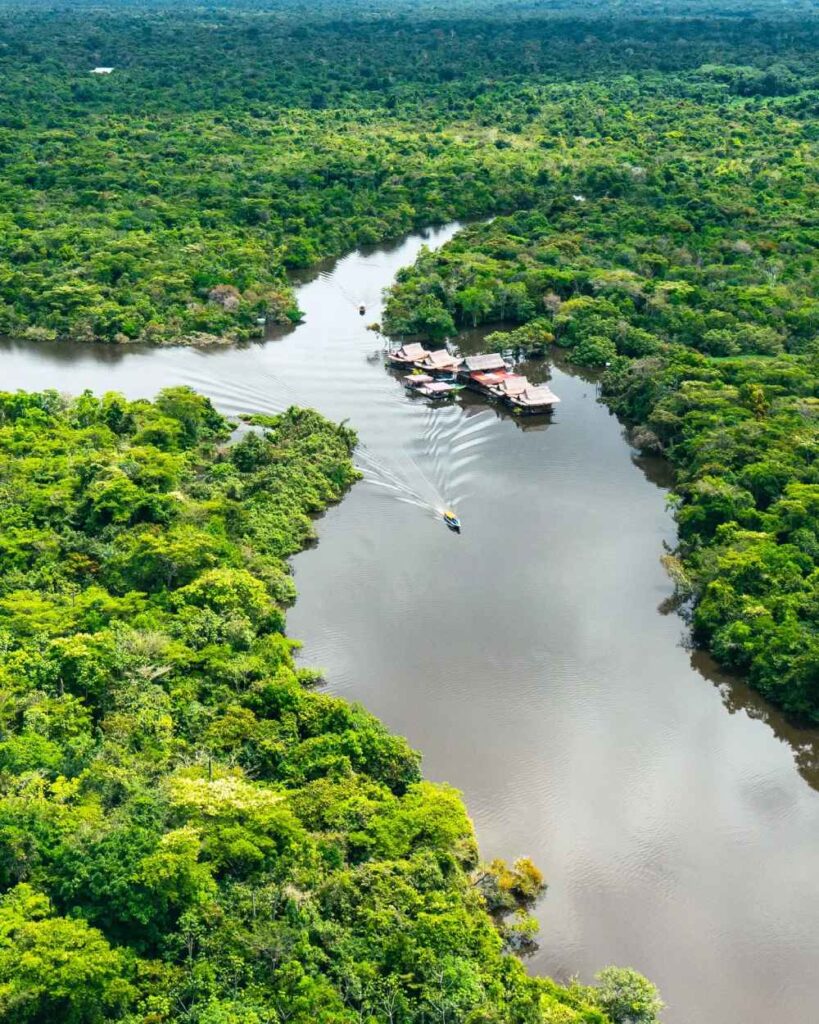
Yasuní National Park, in Ecuador’s Amazon region, protects an extensive area of tropical rainforest recognized for its exceptional biological diversity. Within this landscape lies the territory of the Kichwa Añangu Community, which is associated with tourism initiatives including Napo Wildlife Center and Yasuní Ecolodge. The community’s cultural and territorial relationship with the forest extends far beyond the presence of wildlife that attracts international visitors. Local knowledge, guiding experience, and continued wildlife observation provide context that can turn a simple search for photographs into a more meaningful understanding of the ecosystem. Amid the smell of damp earth and the sounds of the canopy, visitors also encounter a community whose relationship with the surrounding forest is closely connected to its territory and conservation efforts.

The presence of a young harpy eagle offers a particularly useful opportunity to understand why conserving large trees and connected forest habitats matters. These powerful raptors require suitable nesting structures and territories capable of supporting sufficient prey populations. Their reproductive rate is slow, making the survival of young individuals especially relevant to the species’ long-term future. Nevertheless, observing a single eagle does not establish that an entire ecosystem is free from environmental pressures. Conservation requires a broader perspective that considers habitat integrity, human activities, and the needs of communities living within the region.
The Harpy Eagle Tour focuses on the possibility of locating the young bird in the area surrounding its nest, with guidance from specialists familiar with its recent movements. This is not a visit to a wildlife enclosure, nor an activity where animals appear at predetermined times. Searching may involve remaining alert for extended periods, listening to instructions spoken quietly, and identifying subtle movements among branches stirred by the wind. Heat, humidity, and the concentration required to scan the canopy can be more tiring than wildlife photography suggests. The potential reward is an opportunity to observe a stage in the development of a powerful rainforest predator that is rarely easy to study in its natural habitat.
Personal preparation can make a significant difference to comfort during a wildlife excursion, even if it cannot improve the chances of finding the eagle. Lightweight long-sleeved clothing, suitable footwear for damp conditions, and insect protection are sensible choices for an Amazonian environment. Carrying drinking water and protecting optical equipment against moisture are also practical considerations, subject to the operator’s specific recommendations. Binoculars can help distinguish shapes and movement among distant branches, although dense vegetation may still prevent an unobstructed view. Listening carefully to the guide, maintaining appropriate distances, and avoiding unnecessary noise are generally more valuable than attempting to approach an animal too quickly.
There is a considerable difference between searching for a wild animal and expecting its appearance to be a guaranteed part of an itinerary. In the first case, visitors accept that the animal’s behavior takes priority and that an excursion may end without a direct sighting. In the second, an animal’s absence risks being interpreted as a failure of the service, even when the forest is functioning exactly as it should. The Harpy Eagle Tour calls for the first perspective, particularly now that the young bird is spending increasing amounts of time away from its nest. The silence of a long wait can be frustrating, but it also encourages visitors to notice an environment that usually remains outside the camera frame.
The eagle’s activity takes place within a forest system where numerous species share food resources, space, and shelter. While searching for its outline among the treetops, visitors may hear other birds calling, insects moving through vegetation, and unfamiliar sounds whose origins are difficult to identify. Not every encounter will be dramatic, and not every observation will produce a photograph. Part of the experience involves understanding why wildlife remains concealed and how the structure of the rainforest influences what humans can observe. A knowledgeable guide can explain these ecological relationships even when the excursion’s main subject remains out of sight.
Responsible wildlife observation requires clear boundaries, particularly when an animal is passing through a sensitive stage of development. In the case of the young harpy eagle in Añangu, the objective should be to observe its activity without interfering with its movements, rest, or opportunities to feed. Visitors should follow the expedition team’s instructions, avoid attempts to attract the bird, and refrain from playing recorded calls to provoke a response without appropriate specialist authorization. The noise of an impatient group or sudden movements made to obtain a better photograph can interfere with an encounter that depends on discretion. Human behavior matters just as much as the quality of the equipment used.
The young eagle will continue exploring its territory regardless of tourist reservations, cameras, or the expectations of those arriving in Yasuní. It may return to the nest while observers are nearby, remain concealed for hours, or move in ways that require the guides to adjust their search. The team at Napo Wildlife Center and Yasuní Ecolodge can interpret this stage through recent observations, but no guide can determine when the eagle will appear. Travelers willing to accept the heat, the waiting, and the persistent sounds of the rainforest have an opportunity to understand how a powerful bird of prey develops in freedom. And if the eagle never appears, the forest still offers something less immediate but equally meaningful: the chance to recognize that wildlife does not exist to satisfy our expectations.
The young eagle has been observed within the territory of the Kichwa Añangu Community, inside Yasuní National Park in the Ecuadorian Amazon. Guides from Napo Wildlife Center and Yasuní Ecolodge have monitored its development around the nesting area.
No. The young eagle now makes daytime hunting excursions and spends increasing amounts of time away from its nest. Although guides use their latest observations to direct the search, they cannot guarantee that the bird will be visible during a particular excursion.
According to the observation team, the eagle has begun leaving its nest during the day to hunt and returning at night to rest. This represents an important developmental stage, although it does not necessarily mean the bird has achieved complete independence.
Lightweight long-sleeved clothing, appropriate footwear for humid conditions, insect protection, drinking water, and binoculars are sensible items to consider. Visitors should confirm specific equipment requirements and excursion conditions with the tour operator before traveling.
The young eagle is developing behaviors essential to its survival, including moving through the forest and searching for food. Maintaining a suitable distance, reducing noise, and following the guides’ instructions help prevent unnecessary interference with its natural activities.




Leave a Comment